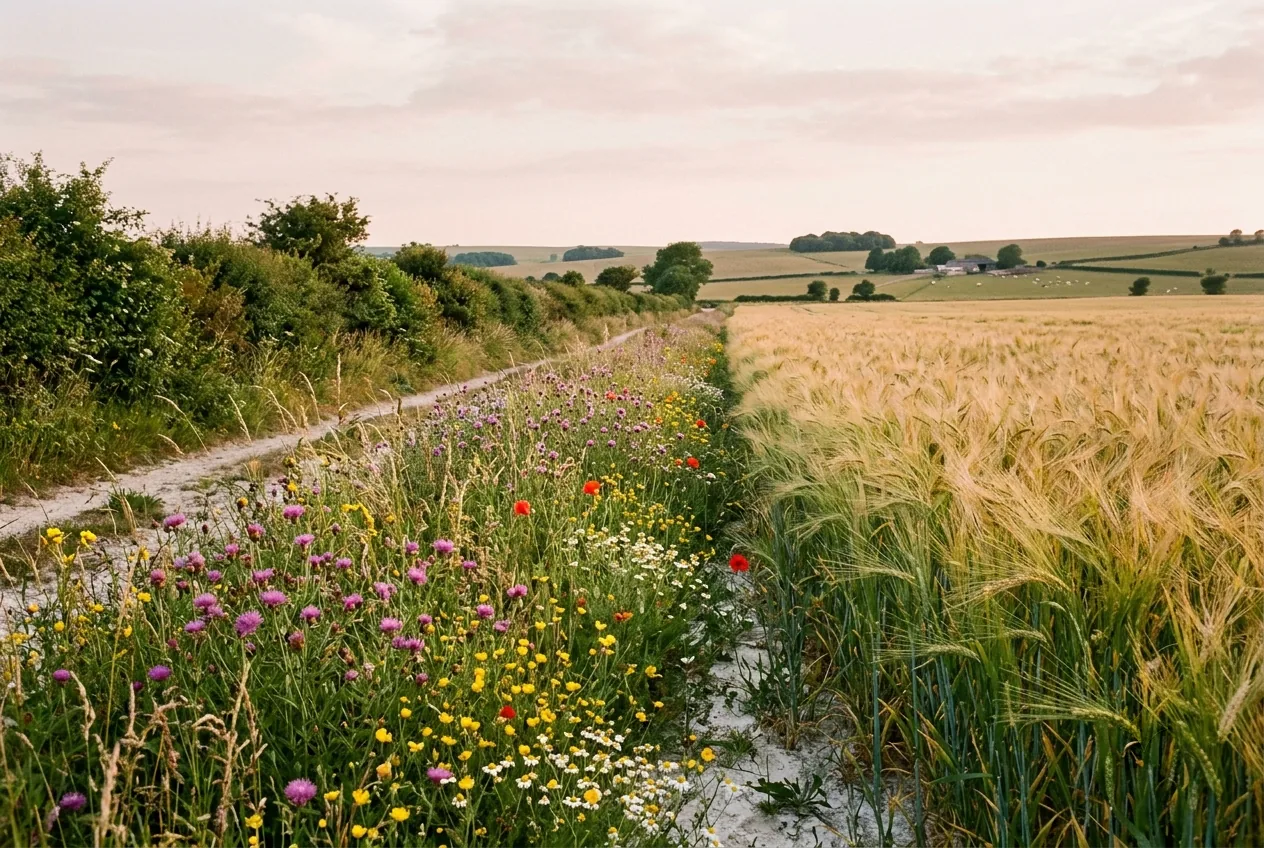
Around the edge of most of our fields runs a strip of grass and flowers six metres wide. It is not wasted land. It is some of the hardest-working ground on the farm.
We started leaving margins in 2019, when Will and Joanna took over and drew up a plan for the hedges and field edges. Seven years on, there are eighteen miles of them.
What the margins do
They keep fertiliser and spray away from the hedge bottoms and ditches. They give ground-nesting birds like skylarks and grey partridge somewhere safe to raise a brood. And they are full of the insects that eat the aphids that would otherwise eat our crops.
Margins cost us crop, of course. Around six per cent of our arable land is now in strips, and we receive a payment for managing them under the countryside stewardship scheme. The payment covers most of the lost yield. The rest is made up by spending less on sprays.
“The margins pay their rent in birds, bees and fewer sprays. That is a good tenant.”
Some margins are sown with tussocky grasses for nesting cover, some with wildflowers and clovers for pollinators, and some with seed-bearing plants that feed finches and buntings through the winter.
A six-metre margin beside the barley on Home Ground.
Counting the birds
Each spring a local volunteer walks the same route around the farm and counts the birds by song and sight. This year she recorded forty-one species, including eleven pairs of skylarks and a family of grey partridge in the margin by the Dutch barn.
We will never be a nature reserve, and we do not want to be. We grow food. But we think a farm can grow good food and still sound like a farm should on a June morning. If you come on a farm walk, bring binoculars.
They also take work. Some are cut once a year in late summer, some every other year, and the flower mixes need resowing every five years or so. Will plans it in the field book, field by field, and the contracting team fits the cutting in around the hedges.


