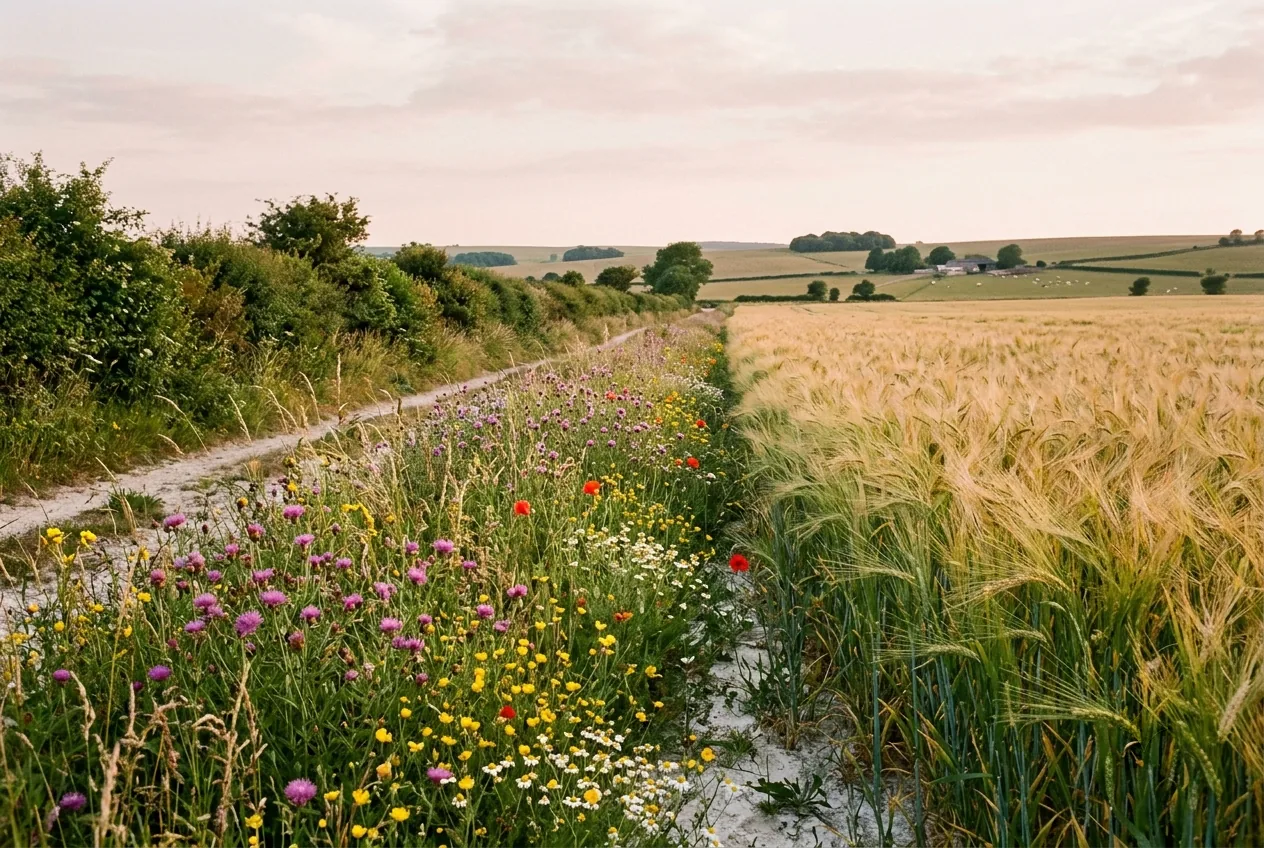
We started on the oilseed rape on 14 July and cut the last of the winter wheat on 26 August. Six weeks, three crops, one combine and a great deal of tea. This is the short version of how it went.
Yields came in close to our five-year average. The rape was a little light after a dry May, the wheat was better than we feared, and the spring barley, which is the crop we worry about most, came through well.
What came off the fields
Across 1,200 acres we harvested 236 tonnes of oilseed rape, 1,080 tonnes of winter wheat and 412 tonnes of spring barley. Every load is weighed over the bridge at the yard before it goes into store, so these are real numbers, not guesses from the cab.
Harvest is a team effort. Will drives the combine, Sam carts the grain to the yard, Dev runs the dryer at night and Joanna keeps everyone fed and the weighbridge tickets in order. Two students joined us for the summer and both learned to reverse a grain trailer, which is harder than it looks.
“The barley tested at 1.6% nitrogen. That is exactly where the maltsters want it.”
Malting barley is a fussy crop. Too much nitrogen and the brewers turn it down; too little and the yield suffers. We grow it on our thinnest chalk and feed it carefully, and this year the balance came right.
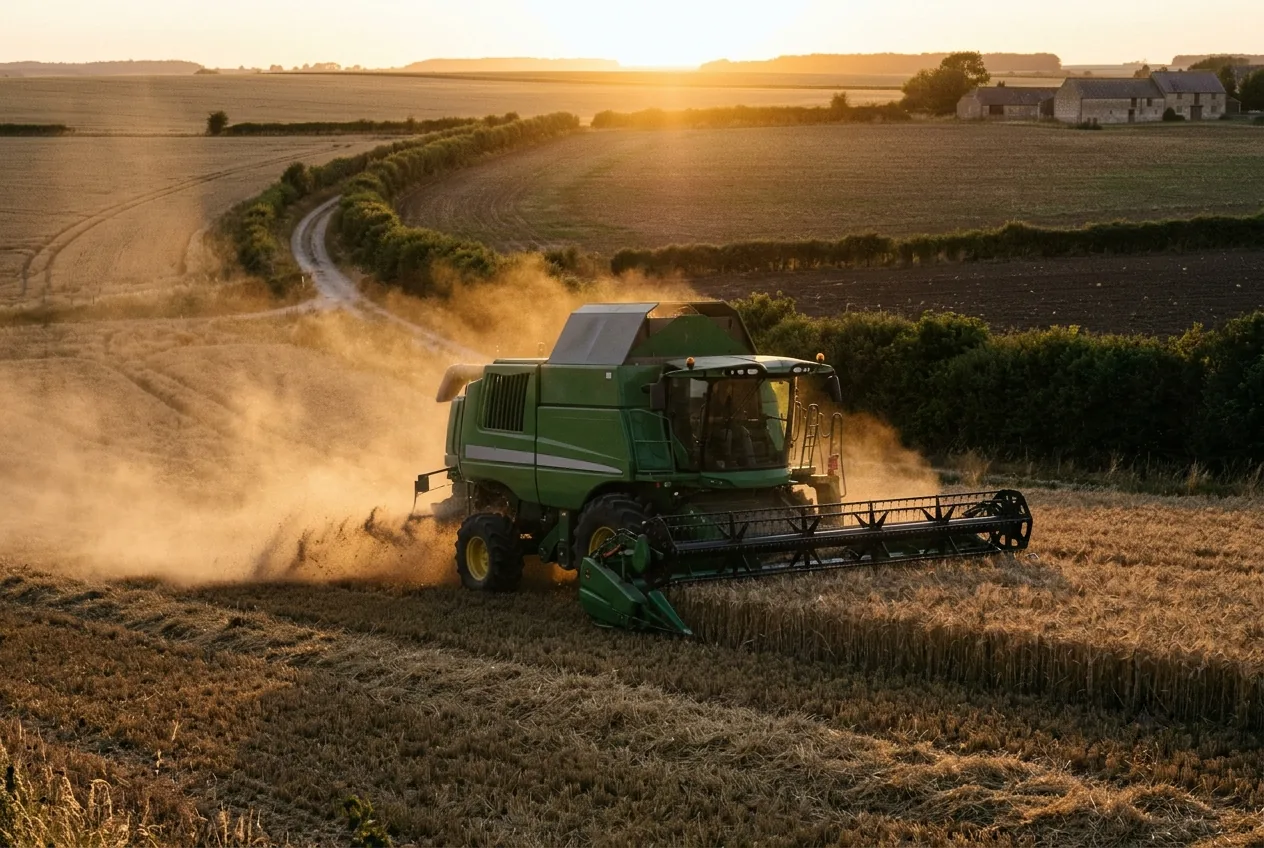
The combine on Long Furlong, last week of August.
Rain, the dryer and the store
Two wet weeks in early August stopped us twice. When the weather broke we cut through the evenings and ran the grain dryer through the night to bring everything down to 14.5% moisture, the level it needs to keep safely until spring.
Everything is now on the floor of the main barn and the overflow store, sorted by crop and by field so we can trace every load. The first lorries for the maltings go in late September. Straw baling finished on the last Saturday of August, and the stubbles are already being worked down for next year’s rape. If you buy straw from us, the small bales are in the Dutch barn and ready to collect.
Next year’s rape went in on 22 August into moist ground behind the combine. It is already up and green, and the pigeons have noticed. We will keep an eye on it through the autumn and hope for a kinder spring.