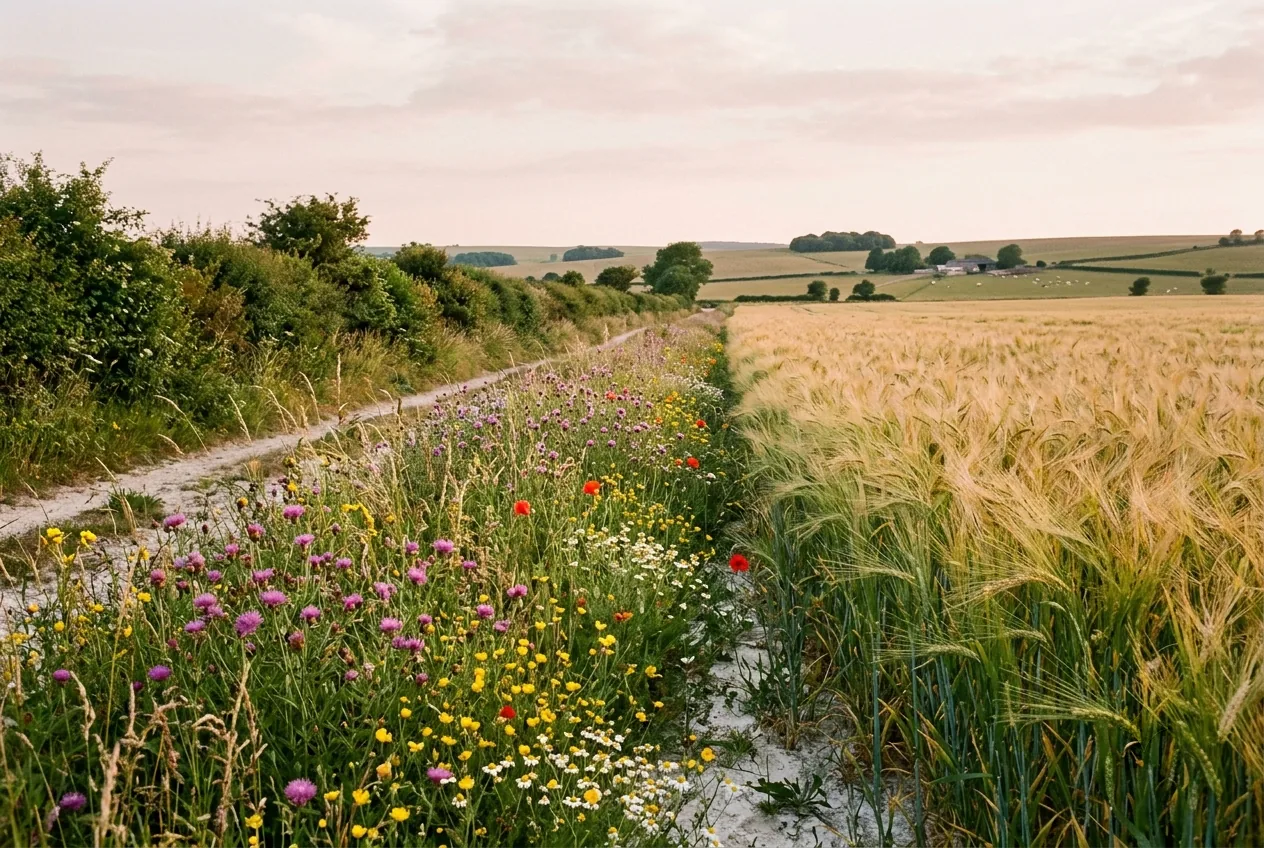
Every July, before the combine goes in, we walk every field of barley on foot. It takes most of a week and it is the most useful week of the year.
From the cab you see a crop. From the tramlines you see a thousand small things: where the soil is thin, where the weeds got away, where the rabbits have been at the headland.
What we look for
We pull heads and rub them out in our hands to check the grain is filling evenly. We look for disease on the top leaves, for patches that went down in the June storms, and for wild oats, which the maltsters will not take at any price.
We walk in pairs where we can. One person looks at the crop, the other looks at the ground: soil colour, drainage, compaction from the sprayer wheels. Two sets of eyes catch more, and it is better company on a hot afternoon.
“Walk it, rub it, smell it. The barley tells you when it is ready if you take the time to listen.”
We also take samples from each field and send them away for a quick nitrogen test. That tells us which fields to cut first and which loads to keep separate for the maltings.
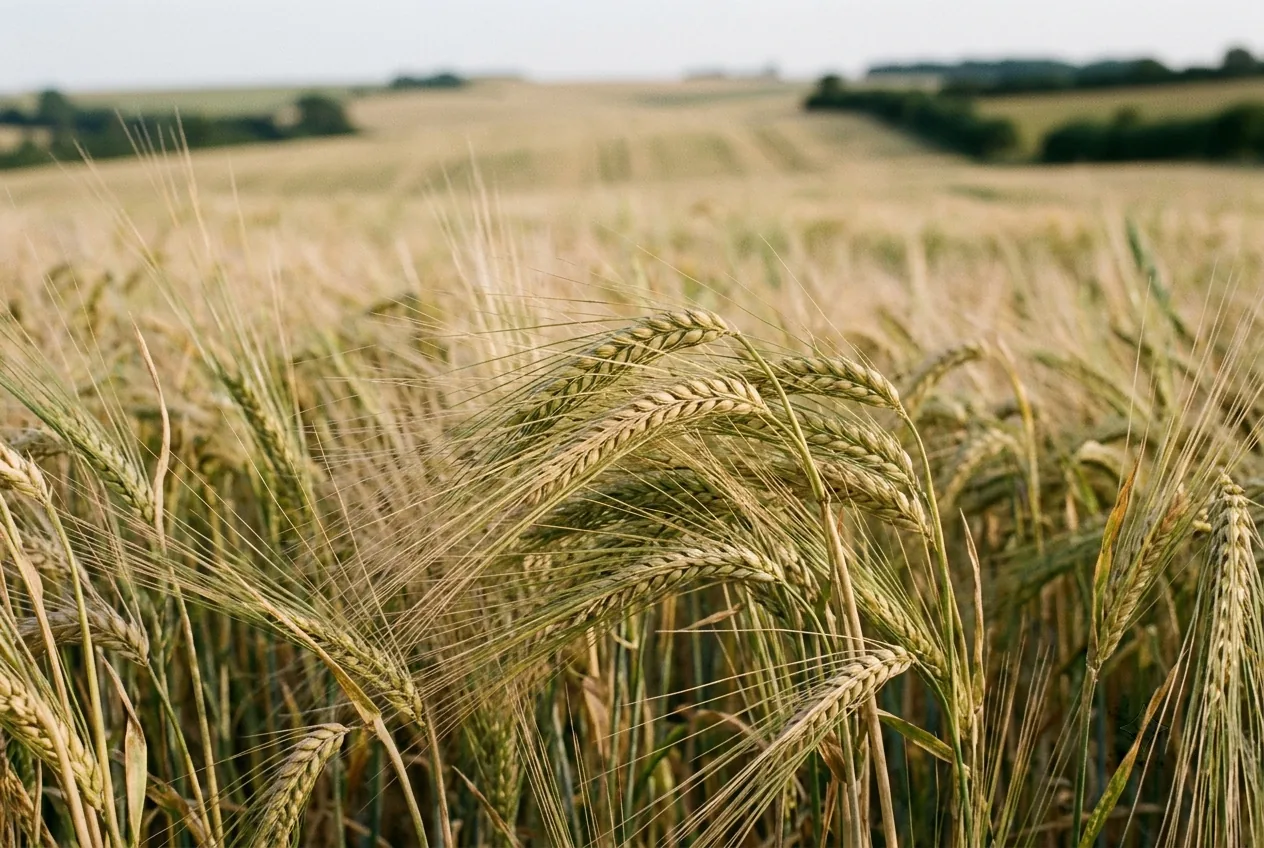
Spring barley on Middle Down, ten days before cutting.
Writing it all down
Everything goes into the field book: the date, the state of the crop, the problems and what we will change next year. Some of those books go back to the 1960s, and it is remarkable how often the same corner of the same field does the same thing in a wet year.
This year the barley looked well almost everywhere. A few acres on Long Furlong went flat after the storms and will be cut last and sold for feed. The rest should make malting. By the time you read this the combine will tell us whether we were right.
The walk also tells us about next year. Fields that struggled get a closer look at their soil, and sometimes a change of crop. A field book with forty years of notes is a better guide than any satellite map.