
Ninety Hereford cows, eighty-seven live calves and more nights in the calving shed than any of us would like to count. Spring calving ran from late February to the middle of April.
We calve in spring so the cows and calves can go out together onto fresh grass in April. It suits the breed, it suits the downland, and it means the calves are big enough to weather the first cold nights outside.
How the season went
Most cows calved on their own, which is how Herefords are meant to do it. Sam helped with eleven and the vet came out twice. We lost three calves, two of them twins, which is about our usual and still the hardest part of the job.
Calving starts long before February. The cows are scanned in autumn to confirm they are in calf, and their diet is managed through the winter so they are fit, not fat. A cow in the right condition calves more easily and has more milk for her calf.
“You can read every book on calving, but the cow has usually read a different one.”
Each calf is tagged and weighed within a day, and its mother’s record is updated so we know which cows calve easily and raise good calves. Those are the cows whose daughters we keep.
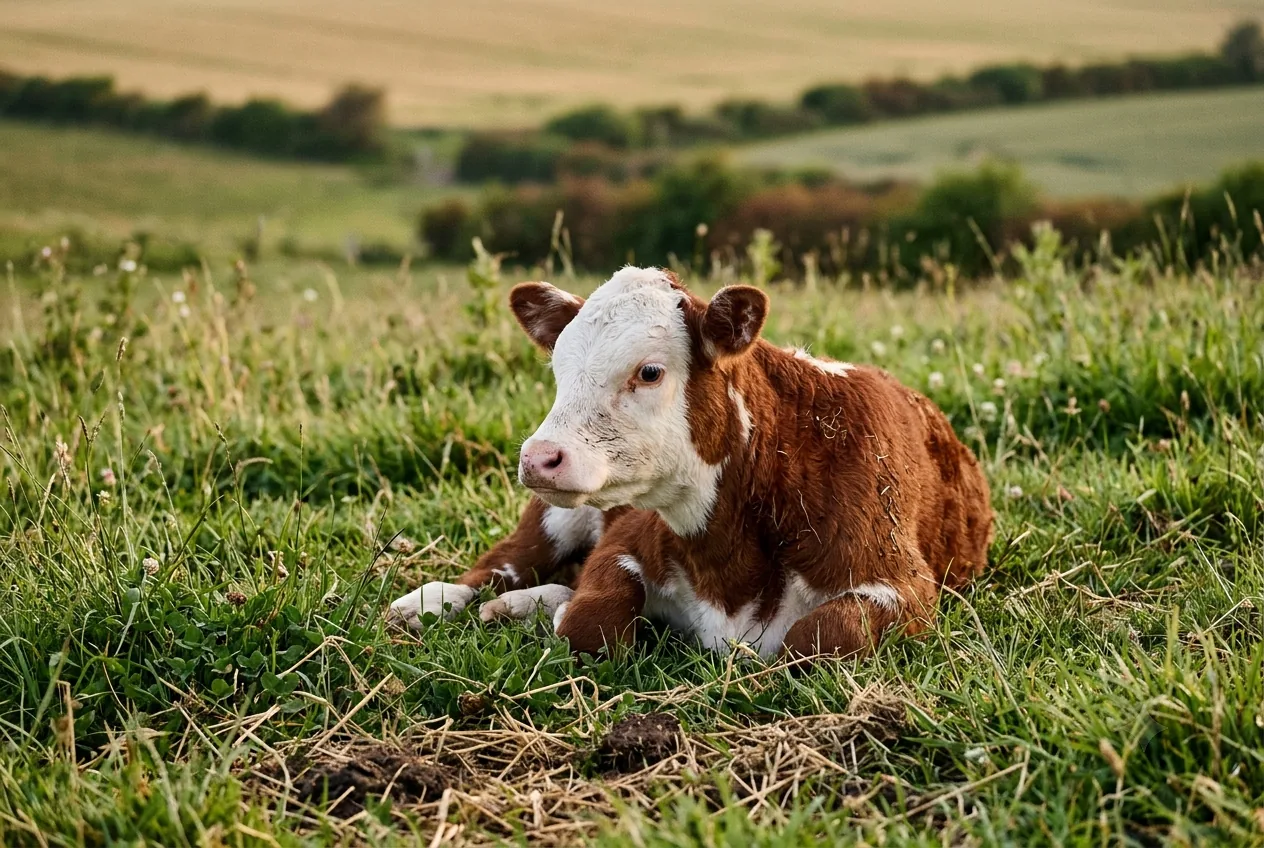
One of this year’s heifer calves, three weeks old.
Out onto the grass
The first group went out on 9 April onto the meadows below the farm. The rest followed over the next fortnight as the grass came. Watching ninety cows and their calves run out of the yard for the first time each year never gets old.
The steers will finish on grass and our own hay next year and go to our two local butchers and into our beef boxes. The best heifers stay with the herd. If you would like a box from next spring, the farm office keeps a list and will ring you when the date is fixed.
The bull we use is chosen for easy calving and good growth, and his calves this year were exactly that: neat at birth and growing well. We will keep him for another season and look at a second bull for the heifers next year.


